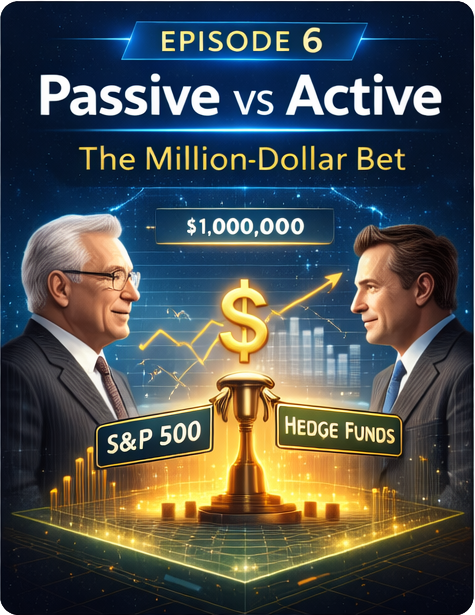
Episode 06 — Passive vs Active Investing
Duration: 11:04 minutes
The most important investment decision you will make — and why it shapes everything that comes after it.
Episode Overview
Duration: 11:04 minutes
Every parent building a financial future for their child will face one decision that shapes everything else: how to invest. In this episode, I break down the difference between passive and active investing — what each approach actually means, what it costs, and what the evidence says about which one serves long-term wealth building better. The numbers we looked at in Episode 5 around fees now come into full focus. This is the episode where the system starts to take its final shape.
What You'll Learn
- What active investing is and why it promises more than it delivers
- What passive investing is and how index funds work
- Why the majority of active funds underperform the market over time
- How fees compound the gap between active and passive returns
- Why passive investing is the foundation of the system I recommend
Key Takeaways
Active rarely wins
Most actively managed funds fail to beat the market over the long term — and charge more for the privilege.
Passive keeps more
Index funds track the market at a fraction of the cost, letting compounding work without unnecessary drag.
This decision is foundational
Getting this right from the start protects everything else you build for your child’s future.
Episode Summary (click to expand)
An overview of what’s covered in this episode.
In the previous episode, I showed you how fees silently erode your child’s financial future — and how the difference between high and low fees over 18 years can amount to thousands of euros gone before your child ever sees them. In this episode, I explain exactly where that fee difference comes from, and why the first investment decision you make is the most consequential one.
Active Investing
Active investing means hiring someone — a fund manager, an advisor, a platform — to try to beat the market. The promise is compelling: expert analysis, smart timing, better returns than average. The reality, backed by decades of data, is very different. I walk through why the majority of actively managed funds underperform a simple market index over a 10 or 20 year period — and why the fees they charge make the gap even wider.
Passive Investing
Passive investing doesn’t try to beat the market. It joins it. Through index funds, your money is spread across hundreds or thousands of companies automatically — tracking the performance of entire markets at a fraction of the cost of active management. No stock picking. No timing. No expensive intermediaries. Just consistent, low-cost participation in long-term global growth.
I explain why this approach aligns perfectly with everything we’ve built so far — the time horizon, the diversification, the automation, the fee awareness — and why it is the foundation I recommend for parents building long-term wealth for their children.
The Numbers
The fee example from Episode 5 comes back into focus here. The difference between a 0.2% and a 2% annual fee isn’t just about cost — it’s about what you are paying for. With passive investing, low fees are built in by design. With active investing, high fees are the starting point — and outperformance is far from guaranteed.
Listen to the full episode to hear the complete breakdown, the data behind the decision, and the clear, practical conclusion I share to help you move forward with confidence.